


Flame-retardant cables are designed to resist the spread of fire. They self-extinguish once the flame source is removed, enhancing safety in critical areas.
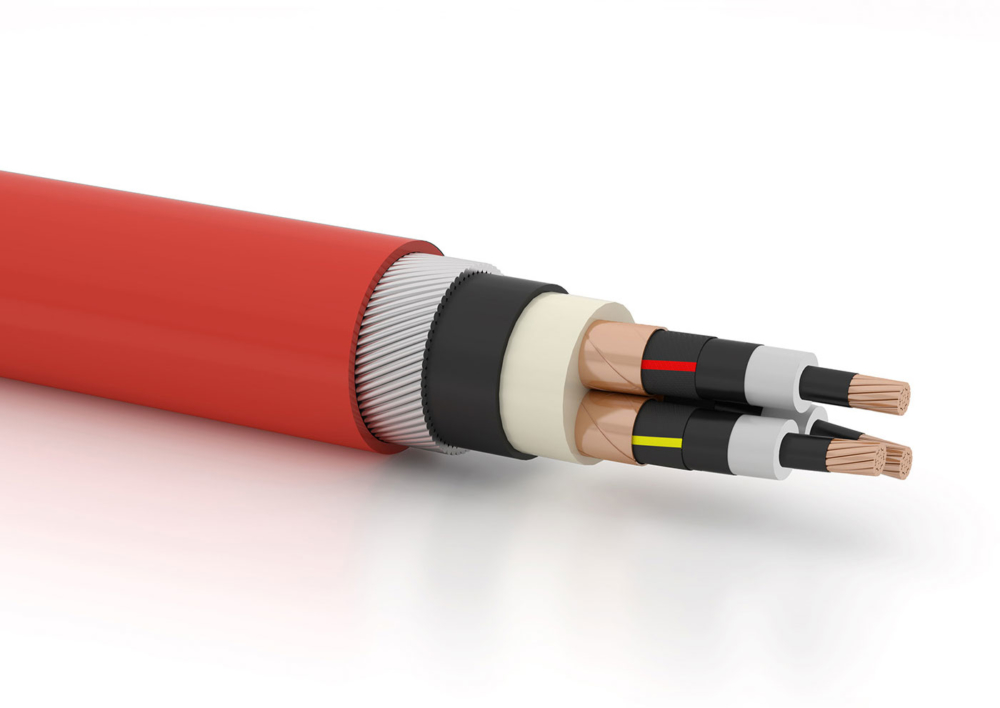
Table of Contents
- What Defines a Flame-Retardant Cable?
- Flame-Retardant vs. Fire-Resistant: A Critical Distinction
- The Science Behind Flame Retardancy in Cables
- Navigating International Standards and Classifications
- Where Are Flame-Retardant Cables Used?
- Selecting the Appropriate Flame-Retardant Cable for Your Project
- Frequently Asked Questions about Flame-Retardant Cables
What Defines a Flame-Retardant Cable?
A flame-retardant cable is an electrical or communication cable specifically engineered to prevent the propagation of fire. Its primary safety feature is the ability to self-extinguish. When exposed to a direct flame, the cable’s jacketing and insulation materials will burn, but once the external fire source is removed, the combustion process stops on its own. This characteristic is crucial in containing a fire to its point of origin and preventing it from traveling along cable trays, through walls, or between floors, which could otherwise lead to a catastrophic, widespread blaze.
The core purpose of using flame-retardant cables is not to ensure the cable remains operational during a fire but to minimize fire spread and its associated hazards. By limiting the flame propagation, these cables significantly enhance the overall safety of an installation, protect valuable equipment from extensive fire damage, and allow more time for occupants to evacuate and for fire suppression systems to activate. The materials used in their construction are treated with special chemical additives that interfere with the combustion cycle, making them a fundamental component of modern electrical safety protocols.
Flame-Retardant vs. Fire-Resistant: A Critical Distinction
Understanding the difference between flame-retardant and fire-resistant (also known as fire-rated) cables is essential for proper specification and safety compliance. While the terms are often used interchangeably in casual conversation, they describe two distinct functionalities with different performance objectives. A flame-retardant cable is designed to stop the spread of fire, whereas a fire-resistant cable is designed to continue operating for a specified period while under direct fire.
Fire-resistant cables are vital for critical life-safety circuits, such as fire alarm systems, emergency lighting, smoke extraction fans, and water pumps. Their ability to maintain circuit integrity ensures that these essential systems function during an emergency, facilitating safe evacuation and firefighting efforts. In contrast, flame-retardant cables are used in general wiring applications where preventing fire propagation is the main goal, but continued operation during a fire is not required. Choosing the wrong type can compromise the safety and functionality of an entire system.
| Feature | Flame-Retardant Cable | Fire-Resistant Cable |
|---|---|---|
| Primary Function | Resists the spread of fire; self-extinguishes. | Maintains circuit integrity and continues to operate during a fire. |
| Goal | Containment and limitation of fire damage. | Functionality of critical life-safety systems. |
| Typical Testing | Measures flame propagation distance (e.g., IEC 60332). | Measures time to circuit failure under direct flame (e.g., IEC 60331). |
| Common Applications | General power, control, and data wiring in buildings and industrial plants. | Fire alarms, emergency lighting, sprinkler systems, and essential control circuits. |
The Science Behind Flame Retardancy in Cables
The performance of a flame-retardant cable is determined by the chemical composition of its insulation and jacketing materials. Manufacturers achieve these properties by incorporating specific additives into polymer compounds, which actively disrupt the chemical reactions required for fire to sustain itself. This advanced material science is what gives the cable its self-extinguishing capabilities.
Key Materials and Compounds
Several polymer compounds are commonly used in the manufacturing of flame-retardant cables, each offering a different balance of performance, flexibility, and cost.
- Polyvinyl Chloride (PVC): Standard PVC is inherently flame-retardant due to its chlorine content. When heated, it releases hydrogen chloride gas, which inhibits combustion. While effective and cost-efficient, this process also releases dense, corrosive, and toxic smoke, which can be hazardous in enclosed spaces.
- Cross-Linked Polyethylene (XLPE): XLPE offers excellent electrical and thermal properties but is naturally flammable. To make it flame-retardant, manufacturers add specific halogenated or non-halogenated retardant compounds during the manufacturing process.
- Low Smoke Zero Halogen (LSZH): LSZH compounds are increasingly the preferred choice for applications in public spaces like airports, subways, and hospitals. These materials are formulated with mineral-based, non-halogenated flame retardants. When exposed to fire, they release very low levels of smoke and, crucially, no toxic halogen gases. This significantly improves visibility for evacuation and reduces the risk of respiratory harm.
Mechanisms of Fire Suppression
Flame retardants work through several chemical and physical mechanisms to interrupt the “fire triangle” of heat, fuel, and oxygen. When the cable is heated, these additives activate. One common mechanism is the release of water vapor, which cools the material at the source of the flame and dilutes the flammable gases. Another method involves the formation of a solid, non-flammable layer of char on the cable’s surface. This char layer acts as an insulating barrier, cutting off the underlying polymer (the fuel) from the heat and oxygen, effectively smothering the fire.
Navigating International Standards and Classifications
To ensure reliability and safety, flame-retardant cables are subjected to rigorous testing based on international and regional standards. These standards provide a universal benchmark for performance, allowing engineers and installers to select products with confidence. Compliance with these standards is often a legal requirement mandated by building codes and industry regulations.
IEC Standards (e.g., IEC 60332)
The International Electrotechnical Commission (IEC) provides some of the most widely recognized standards for flame propagation testing. The IEC 60332 series is particularly important:
- IEC 60332-1: This tests the flame propagation characteristics of a single, vertically mounted insulated wire or cable. It is the basic test for flame retardancy.
- IEC 60332-3: This is a more stringent test that evaluates the flame propagation of vertically mounted bunched cables. It simulates real-world conditions where multiple cables are installed together in a tray, a scenario where fire can spread much more rapidly. Different categories (A, B, C, D) within this standard specify the volume of combustible material and test duration.
UL Ratings (e.g., UL 94, VW-1)
Underwriters Laboratories (UL) offers another set of prevalent standards, particularly in North America. The UL 94 standard rates the flammability of plastic materials used in devices and appliances. For cables, the VW-1 (Vertical-Wire) flame test is a key indicator of performance. A cable that passes the VW-1 test has demonstrated its ability to self-extinguish within a specific timeframe after being subjected to a vertical flame, confirming its high degree of flame retardancy.
Where Are Flame-Retardant Cables Used?
The application of flame-retardant cables is widespread across nearly every sector where electrical wiring is present. The primary goal is to enhance safety by preventing a small electrical fault from escalating into a major fire. The specific type of flame-retardant cable chosen often depends on the environmental conditions and occupancy levels of the location.
Industrial and Manufacturing Environments
In industrial settings such as chemical plants, oil and gas refineries, and power generation facilities, the risk of fire is heightened due to the presence of flammable materials and high-power equipment. Flame-retardant control and instrumentation cables are essential for protecting automated processes and ensuring that a localized fire does not cascade through the control system, which could lead to a catastrophic failure. Their robust construction and ability to limit fire spread are critical for maintaining operational safety and protecting high-value assets.
Public and Commercial Buildings
In buildings with high occupant density—such as hospitals, schools, airports, shopping malls, and high-rise offices—safety is paramount. Wiring in these locations, especially in plenums and risers, must be flame-retardant to comply with strict building codes. The use of LSZH flame-retardant cables is often mandated in these environments. By minimizing smoke and eliminating toxic fumes, LSZH cables help keep evacuation routes clear and safe for occupants during a fire, directly contributing to life safety.
Selecting the Appropriate Flame-Retardant Cable for Your Project
Choosing the correct flame-retardant cable requires a careful assessment of the application’s specific needs, regulatory requirements, and environmental factors. The first step is to identify the primary risk: Is it fire propagation or the need for continued operation? This will determine whether a flame-retardant or fire-resistant cable is needed. Next, consider the installation environment. For enclosed public spaces, an LSZH cable is the superior choice for life safety. In an open industrial area, a traditional PVC or XLPE flame-retardant cable might be sufficient.
Always verify the required standards and certifications for your region and industry. Compliance with local electrical codes and international standards like IEC or UL is non-negotiable. For complex projects with unique environmental challenges or performance requirements, partnering with a specialist manufacturer is invaluable. Companies like D-Lay Cable offer expert consultation and can engineer custom flame-retardant cable solutions tailored to specific industrial needs, ensuring that every product not only meets but exceeds the required safety and performance benchmarks. This collaborative approach guarantees a solution that is both compliant and optimized for its intended use.
Frequently Asked Questions about Flame-Retardant Cables
What happens if you use a non-flame-retardant cable in a high-risk area?
Using a standard, non-flame-retardant cable in a high-risk environment creates a significant fire hazard. The cable can act as a fuse, rapidly spreading fire along its length from one area to another. This can turn a small, containable incident into a large-scale, destructive fire, leading to extensive property damage and endangering lives.
Are all LSZH cables flame-retardant?
Yes, virtually all LSZH cables are designed to be flame-retardant. The materials used to achieve low-smoke and zero-halogen properties are inherently formulated with flame-retardant additives. However, the degree of flame retardancy can vary, so it is important to check that the cable meets the specific standard required for your application, such as IEC 60332-3 for bunched cables.
Can flame-retardant cables be used outdoors?
Yes, but the cable must also be rated for outdoor use. In addition to flame retardancy, an outdoor cable needs to have a jacket that is resistant to UV radiation, moisture, and extreme temperatures. A cable designed only for indoor flame retardancy will degrade quickly when exposed to the elements. Always check the manufacturer’s specifications to ensure a cable is suitable for both its fire safety and environmental requirements.
Anchor Text Suggestions for Future Linking:
- The Critical Distinction Between Flame-Retardant and Fire-Resistant
- Key Materials in Fire-Performance Cables
- International Standards for Flame-Retardant Cables
- Common Applications for Flame-Retardant Wiring
- How to Select the Right Industrial Cable