


In today’s digitally connected world, the speed and reliability of your network are paramount. From seamless 4K video streaming at home to critical data transfers in the office, the backbone of this connectivity is often an unassuming Ethernet cable. Among the most popular and versatile options is the Category 6, or Cat6, cable. But what exactly is it, and why has it become the go-to standard for new installations?
As a leading manufacturer of communication cables, we at D-Lay Cable believe in empowering our clients with knowledge. dlaycable will break down everything you need to know about Cat6 cable, from its technical specifications to its practical applications, helping you make an informed decision for your networking needs.
First, What Is Cat6 Cable? The Definition
Cat6 stands for “Category 6”. It is a standardized twisted pair cable for Ethernet and other network physical layers that is backward compatible with the Category 5/5e and Category 3 cable standards. Compared to its predecessor, Cat5e, Cat6 features more stringent specifications for crosstalk and system noise, resulting in a more stable and faster connection.
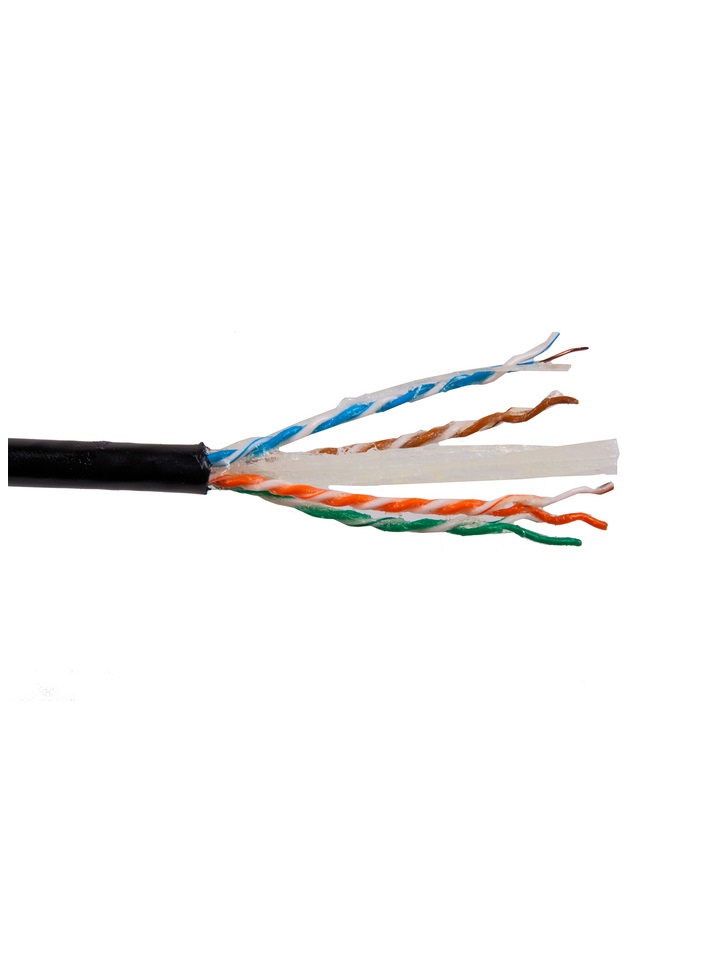
The key to its enhanced performance lies in its construction. Cat6 cables have:
- Tighter Twists: The pairs of copper wires inside the cable are twisted more tightly than in Cat5e.
- A Central Spline: Most Cat6 cables include a plastic separator, known as a spline or cross-filler, that isolates each of the four twisted pairs from the others.
These two improvements work together to significantly reduce alien crosstalk (ANEXT) and near-end crosstalk (NEXT)—unwanted signal interference between adjacent cables and wire pairs. The result is a cleaner signal, fewer errors, and superior performance.
Cat6 Specifications: Speed and Bandwidth
Understanding the numbers behind Cat6 helps illustrate its power. The two most important specifications are speed (data rate) and bandwidth (frequency).
- Speed (Data Rate): Cat6 cable supports data transfer speeds of up to 10 Gigabits per second (Gbps). However, this 10 Gbps speed is effective only up to a distance of 55 meters (180 feet). For distances up to 100 meters (328 feet), Cat6 reliably supports standard 1 Gbps (Gigabit) speeds.
- Bandwidth: Cat6 is rated for a bandwidth of 250 MHz. Think of bandwidth as the width of a highway; a higher MHz means more data can be transmitted simultaneously. At 250 MHz, Cat6 has more than double the bandwidth of Cat5e (100 MHz), allowing for more robust data flow.
Cat6 vs. Cat5e vs. Cat6a: The Key Differences
Choosing the right cable often comes down to comparing Cat6 with its closest relatives. Here’s a clear comparison to help you decide.
| Feature | Cat5e | Cat6 | Cat6a (Augmented) |
|---|---|---|---|
| Max Speed | 1 Gbps @ 100m | 1 Gbps @ 100m 10 Gbps @ 55m |
10 Gbps @ 100m |
| Bandwidth | 100 MHz | 250 MHz | 500 MHz |
| Crosstalk Reduction | Standard | Improved (Tighter twists, spline) | Superior (Thicker jacket, more shielding) |
| Best For | Basic home/office networks, 1Gbps connections | New home/office installs, future-proofing, PoE, short-run 10Gbps | Data centers, high-demand networks, full-length 10Gbps runs |
For most new installations today, Cat6 offers the perfect balance of price, performance, and future-proofing. It easily handles the demands of modern gigabit networks while providing a clear pathway for future upgrades.
Types of Cat6 Cable: UTP vs. STP
Like other network cables, Cat6 comes in two primary types, which determine its resistance to electromagnetic interference (EMI).
Cat6 UTP (Unshielded Twisted Pair)
This is the most common and affordable type of Cat6 cable. The twisted pairs are sufficient to prevent most interference in typical home and office environments. For the vast majority of LAN installations, UTP is the standard choice.
Cat6 STP/FTP (Shielded/Foiled Twisted Pair)
Shielded Cat6 cables include a layer of foil or braided metal mesh around the twisted pairs. This shield provides extra protection against EMI, which can be generated by heavy machinery, large power lines, fluorescent lights, and other sources of “electrical noise.” You should consider using STP cable in:
- Manufacturing facilities and factories
- Environments with significant radio frequency (RF) interference
- Installations where network cables must run parallel to high-voltage power cables
Common Applications: Where to Use Cat6
Thanks to its versatility and performance, Cat6 is the workhorse of modern structured cabling. It’s ideal for:
- Home and Office Networks: Provides a stable backbone for computers, printers, servers, and NAS drives, ensuring fast file transfers and reliable connectivity.
- Gaming and Streaming: Delivers the low-latency, high-bandwidth connection needed for lag-free online gaming and smooth 4K/8K video streaming.
- Power over Ethernet (PoE): Easily handles the power and data requirements for devices like VoIP phones, IP security cameras, and wireless access points.
- Future-Proofing: Installing Cat6 today ensures your network infrastructure is ready for the next generation of devices and higher speed requirements.
Why Quality Matters: The D-Lay Cable Advantage
Not all Cat6 cables are created equal. As a manufacturer, we know that performance starts with quality materials and precision engineering. When choosing a Cat6 cable, always look for products that adhere to TIA/EIA-568 industry standards. This ensures you’re getting the performance you pay for.
At D-Lay Cable, our Cat6 products are manufactured with 100% pure bare copper conductors. This is a critical distinction from lower-quality Copper Clad Aluminum (CCA) cables. Pure copper offers superior conductivity, flexibility, and resistance to breakage, ensuring a long-lasting and reliable installation.
From bulk Cat6 cable for large installations to pre-terminated patch cords for simple connections, our focus is on providing a product that guarantees signal integrity and network performance.
Conclusion: Is Cat6 the Right Choice For You?
For any new network installation, whether it’s wiring a new home, upgrading an office, or setting up a high-performance media center, Cat6 is an excellent choice. It provides a significant performance jump over Cat5e at a minimal cost difference and lays a solid foundation for the technologies of tomorrow.
It strikes the ideal balance between performance, cost, and practicality, solidifying its place as the de facto standard for modern Gigabit Ethernet and beyond. When you build your network on a foundation of high-quality Cat6 cable, you’re not just connecting devices—you’re investing in speed, reliability, and peace of mind.