


In the world of network infrastructure, every component matters. As a leading manufacturer of high-performance cabling solutions, we at Dlay Cable understand that the foundation of a reliable, high-speed network is the quality of its cables. A common point of discussion, especially for those upgrading older systems or setting up new ones, is the difference between Cat5 and Cat5e Ethernet cables. While they may look similar, their internal differences have a profound impact on your network’s speed and reliability. dlaycable will clarify everything you need to know.
In This Article:
The Foundation: What is Cat5 Cable?
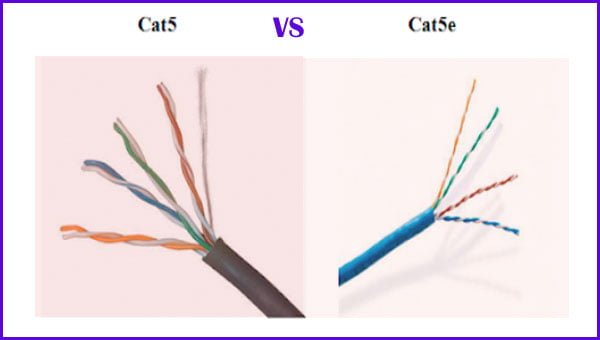
Category 5 (Cat5) cable is the predecessor in this comparison. For many years, it was the standard for Ethernet connectivity, perfectly capable of handling the network demands of its time. It consists of four twisted pairs of copper wire.
- Speed: Supports speeds of 10/100 Mbps (Fast Ethernet).
- Bandwidth: Tested up to 100 MHz.
- Current Status: Obsolete. Cat5 is no longer recognized as a standard by the TIA/EIA and is difficult to find for new purchases. If you have it in your walls, it’s likely from an installation done over 15-20 years ago.
The Evolution: Introducing Cat5e (Enhanced) Cable
As technology advanced and the need for faster data transfer grew, a new standard was required. Enter Category 5 Enhanced (Cat5e). The ‘e’ signifies a crucial evolution in performance. While it also uses four twisted pairs of copper wire, it is manufactured to much stricter specifications.
The primary enhancement in Cat5e is the significant reduction in crosstalk—the unwanted interference between adjacent wire pairs. This is achieved by increasing the number of twists per inch in the wire pairs, resulting in a cleaner signal that can travel faster and more reliably.
- Speed: Supports speeds up to 1000 Mbps or 1 Gigabit per second (Gbps).
- Bandwidth: Also tested up to 100 MHz, but its superior interference resistance allows it to maintain signal integrity for Gigabit speeds.
- Current Status: The current minimum standard for any new Ethernet installation. It offers a perfect balance of performance and cost-effectiveness for most home and small business applications.
Head-to-Head Comparison: Cat5 vs. Cat5e
To make the choice clear, let’s break down the key differences in a simple format.
| Feature | Cat5 | Cat5e |
|---|---|---|
| Max Speed | 100 Mbps (Fast Ethernet) | 1000 Mbps / 1 Gbps (Gigabit Ethernet) |
| Bandwidth | 100 MHz | 100 MHz (with stricter testing standards) |
| Crosstalk | Higher potential for crosstalk | Significantly lower crosstalk due to tighter twists |
| Common Use Case | Legacy 10/100 networks (obsolete) | Modern home, office, and data center Gigabit networks |
| Cost & Availability | Obsolete, not recommended for purchase | Affordable and widely available industry standard |
Speed and Performance: The Gigabit Difference
The most critical difference is speed. Cat5 maxes out at 100 Mbps, which is insufficient for modern activities like streaming 4K video, online gaming, or transferring large files across a local network. Cat5e supports speeds 10 times faster at 1000 Mbps (1 Gbps), making it the clear choice for today’s bandwidth-hungry applications.
Crosstalk and Interference: The Secret to Stability
Speed is meaningless without stability. Cat5e’s superior design with tighter wire twists drastically reduces Near-End Crosstalk (NEXT). This means the signal on one wire is far less likely to interfere with the signal on an adjacent wire, leading to fewer data errors, less retransmission, and a more stable, reliable network connection, especially over longer distances (up to 100 meters).
Practical Application: Which Cable Should You Choose?
The answer here is simple and definitive.
- For any new network installation: Always choose Cat5e or higher (like Cat6). Installing Cat5 today would be like building a new house with outdated plumbing. It severely bottlenecks your network potential from day one.
- If you have an existing Cat5 network: If you’re experiencing slow network speeds and your hardware (router, switches) supports Gigabit speeds, your Cat5 cabling is the bottleneck. Upgrading your patch cables and in-wall wiring to Cat5e is one of the most cost-effective upgrades you can make to unlock the full performance of your network.
The Dlay Cable Advantage: Quality You Can Trust
Choosing the right category of cable is the first step. The second, equally important step, is choosing a quality manufacturer. At Dlay Cable, we build our reputation into every product we ship.
- Superior Materials: All our Cat5e cables are made with 100% pure bare copper conductors, not copper-clad aluminum (CCA). This ensures maximum conductivity, minimal signal loss, and full compliance with industry standards like TIA/EIA-568.
- Precision Manufacturing: Our manufacturing process guarantees consistent twist rates and robust sheathing, providing excellent protection against crosstalk and physical damage.
- Certified Performance: Our products are rigorously tested and certified (UL, ETL, RoHS) to ensure they meet and exceed performance benchmarks, giving you peace of mind that your network is built on a solid foundation.
- Complete Solutions: From bulk Cat5e cable for large installations to pre-terminated patch cords in various lengths and colors, we provide a one-stop solution for all your networking needs.
Ready to build a faster, more reliable network? Explore our full range of high-performance Cat5e Ethernet cables and components today.
Final Verdict
While Cat5 served its purpose in the early days of the internet, it is now firmly in the past. Cat5e is the undisputed winner and the minimum standard for any modern network. Its ability to deliver Gigabit speeds, combined with superior resistance to interference, makes it the essential choice for anyone who values a fast and stable connection. By investing in high-quality, certified Cat5e cabling from a trusted manufacturer like Dlay Cable, you are ensuring your network’s performance for years to come.