


Table of Contents
- When Was Cat8 Cabling Officially Released? A Definitive Answer
- What Exactly is Cat8 Cabling? The Technical Foundation
- A Tale of Two Categories: Understanding Cat8.1 vs. Cat8.2
- Where Does Cat8 Shine? The Primary Application
- Cat8 vs. Its Predecessors: A Comparative Analysis
- The Big Question: Do You Really Need Cat8?
- Why an Expert Cabling Partner is Crucial for High-Performance Networks
When Was Cat8 Cabling Officially Released? A Definitive Answer
Category 8 cabling, commonly known as Cat8, was officially standardized and released in 2016. The Telecommunications Industry Association (TIA) published the standard as ANSI/TIA-568-C.2-1, marking a significant leap forward in copper cabling technology. This development wasn’t intended for everyday office or home use; instead, it was specifically engineered to support 25GBASE-T and 40GBASE-T applications within the unique, high-density environments of modern data centers. At DlayCable, we’ve followed the evolution of this standard from its inception, understanding its niche but powerful role in the future of data infrastructure. dlaycable provides a comprehensive look into Cat8’s origins, its technical prowess, and exactly where it fits in the structured cabling landscape.
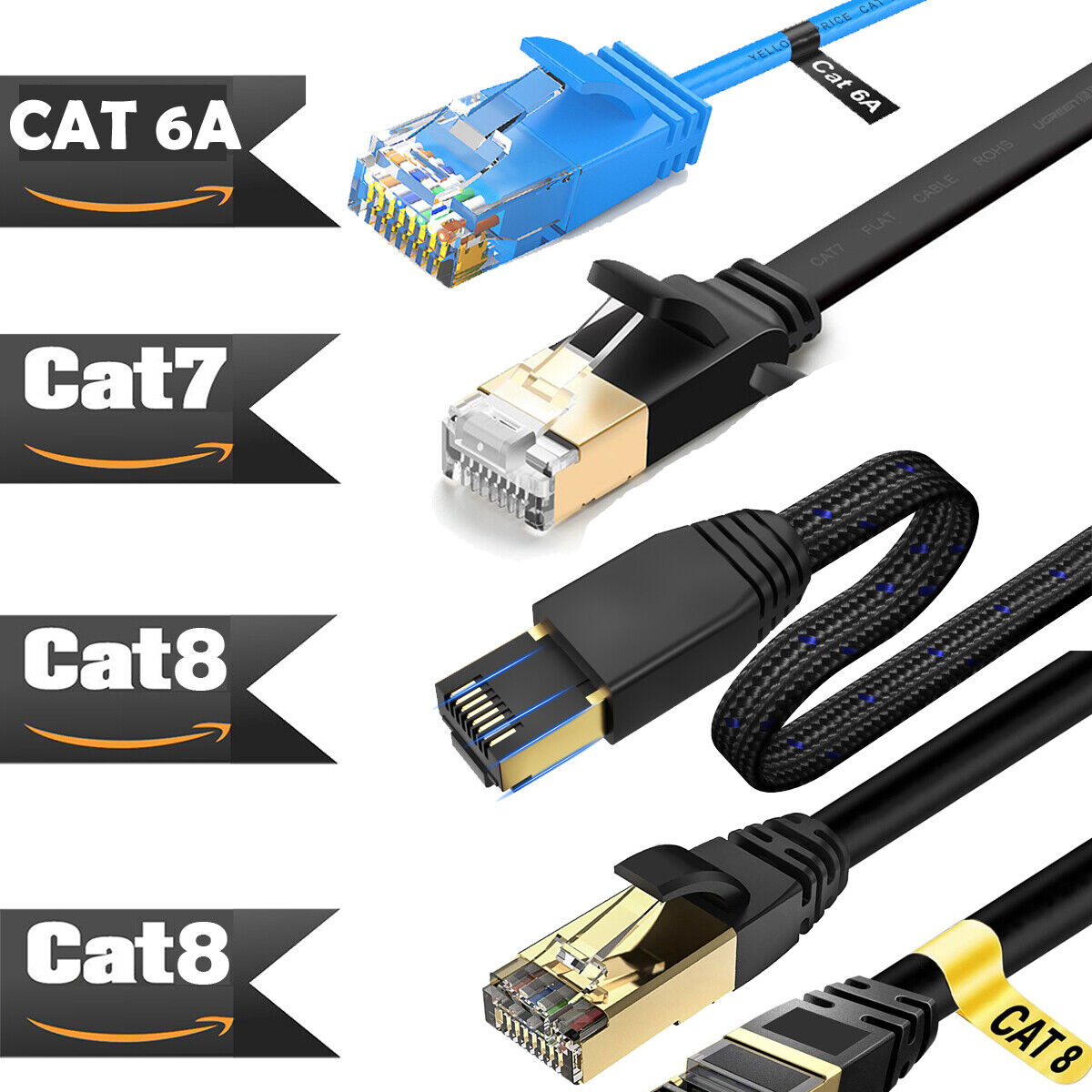
What Exactly is Cat8 Cabling? The Technical Foundation
To truly understand the significance of Cat8’s 2016 release, it’s essential to look beyond the date and dive into its technical specifications. Cat8 represents the highest tier of twisted-pair copper Ethernet cabling, designed for a very specific and demanding purpose. It is a testament to the continued innovation in copper media, pushing the physical limits to accommodate the exponential growth in data traffic.
The Standardization Journey: From Proposal to Publication
The road to Cat8 was paved by the growing needs of data centers. As server speeds increased, the existing 10GBASE-T standard, typically run over Cat6a, was becoming a bottleneck for switch-to-server connections. The industry needed a cost-effective copper solution for higher speeds over short distances. The TR-42.7 Telecommunications Cabling Systems subcommittee within the TIA took up this challenge. After years of development and rigorous testing, the ANSI/TIA-568-C.2-1 standard was finalized and published. This provided manufacturers, installers, and data center managers with a clear, unified set of performance requirements for cables, connectors, and link segments, ensuring interoperability and guaranteed performance.
Core Specifications: Speed, Frequency, and Distance
The Cat8 standard is defined by three game-changing specifications that set it apart from all previous categories:
- Speed: Cat8 is designed to support Ethernet speeds of 25 Gbps (25GBASE-T) and 40 Gbps (40GBASE-T). This is a 4x increase over the 10 Gbps speed supported by Cat6a, which for a long time was the highest standard for copper.
- Frequency: To achieve these incredible speeds, Cat8 operates at a bandwidth of up to 2000 MHz (2 GHz). This is a massive leap from Cat6a’s 500 MHz and Cat7’s 600 MHz, allowing for a much larger data pipeline.
- Distance: Here lies the critical trade-off. Cat8’s phenomenal performance is limited to a 30-meter (98-foot) channel. This channel consists of up to 24 meters of solid horizontal cable and a total of 6 meters of patch cords. This shorter distance is precisely why Cat8 is a data center-specific solution, not intended for horizontal LAN wiring that spans entire office floors.
A Tale of Two Categories: Understanding Cat8.1 vs. Cat8.2
When discussing Cat8, it’s important to note the distinction made by international standards bodies, primarily the ISO/IEC. While the TIA in North America specifies a single “Category 8,” the ISO/IEC defines two classes:
- Cat8.1 (Class I): This standard is designed to be backward compatible with existing Cat6a cabling infrastructure. It uses the familiar 8P8C (RJ45) connector and is interoperable with Cat6a connector interfaces. However, it still meets the stringent 2000 MHz frequency requirement. Its primary advantage is easier integration into environments that already use RJ45 patch panels and outlets.
- Cat8.2 (Class II): This standard offers superior performance and better crosstalk resistance. It is not compatible with the standard RJ45 connector. Instead, it utilizes alternative connectors like the TERA or GG45. Cat8.2 is interoperable with components from Category 7A and lower. It’s considered the more robust solution but requires a complete overhaul of connectivity hardware.
In the North American market, the TIA-568 standard aligns with the Cat8.1 approach, focusing on the RJ45 connector for ease of adoption in data centers.
Where Does Cat8 Shine? The Primary Application
Since its 2016 standardization, Cat8 has not aimed to replace Cat6 or Cat6a in general-purpose networking. Its design and distance limitations give it a laser focus on one environment: the data center.
The Data Center’s Secret Weapon: Top-of-Rack (ToR) and End-of-Row (EoR)
The 30-meter limit of Cat8 cabling perfectly matches the architecture of modern data centers. Its primary use case is in Top-of-Rack (ToR) or End-of-Row (EoR) switch-to-server connections.
- In a ToR setup, a network switch is placed at the top of each server rack. Servers within that rack are then connected to the switch using short copper patch cords. These connections rarely exceed a few meters, making Cat8 an ideal medium for providing high-speed 25/40 Gbps links directly to the servers.
- In an EoR setup, a larger switch is placed at the end of a row of server racks. The connections from the servers to this switch are longer but typically fall well within the 30-meter channel limit of Cat8.
Why Cat8 Is the Copper Alternative to Short-Range Fiber
Before Cat8, achieving 40 Gbps speeds in a data center required using fiber optic cabling, typically with QSFP+ (Quad Small Form-factor Pluggable Plus) transceivers. While effective, this approach has drawbacks. Fiber transceivers consume more power and generate more heat than their copper counterparts. Furthermore, the overall cost of a short-reach fiber channel can be significantly higher than a Cat8 copper channel. Cat8 offers a more power-efficient, cost-effective, and familiar-to-install alternative for these critical short-distance links, simplifying data center management and reducing operational expenses.
Cat8 vs. Its Predecessors: A Comparative Analysis
To understand the value proposition of Cat8, it’s crucial to compare it with the categories that came before it. This highlights not just its advancements, but also why older categories remain relevant.
| Feature | Category 6a (Cat6a) | Category 7 (Cat7) | Category 8 (Cat8) |
|---|---|---|---|
| Max Speed | 10 Gbps | 10 Gbps (designed for 40Gbps over 50m, but not ratified) | 25 / 40 Gbps |
| Max Frequency/Bandwidth | 500 MHz | 600 MHz | 2000 MHz (2 GHz) |
| Max Distance | 100 meters (328 ft) | 100 meters (328 ft) | 30 meters (98 ft) |
| TIA Recognized Standard? | Yes (ANSI/TIA-568-C.2) | No | Yes (ANSI/TIA-568-C.2-1) |
| Shielding | UTP or F/UTP | Required (S/FTP) | Required (F/UTP or S/FTP) |
| Primary Application | Enterprise LAN, PoE, Data Centers (10G) | N/A (Proprietary deployments) | Data Centers (25G/40G ToR links) |
Cat8 vs. Cat7: The Official Standard vs. The “Outlier”
A common point of confusion is the relationship between Cat7 and Cat8. Critically, Category 7 was never officially recognized by the TIA. While it exists as an ISO/IEC standard (Class F), its proprietary non-RJ45 connectors (GG45/TERA) and lack of TIA backing led to very limited adoption in the North American market. Most cables marketed as “Cat7” with RJ45 connectors were, in reality, just higher-spec Cat6a cables. Cat8, being a fully ratified TIA standard, provides the official, industry-backed pathway to speeds beyond 10 Gbps on copper.
Cat8 vs. Cat6a: The Practical Upgrade Path for Most Businesses
This is the most important comparison for most users. For nearly all applications outside of the data center server rack, Cat6a remains the superior choice. Cat6a provides robust 10 Gbps performance over the full 100-meter distance required for horizontal cabling in offices, schools, and hospitals. It’s more than sufficient for high-speed internet, demanding workstations, and advanced Power over Ethernet (PoE) applications. Cat8’s 30-meter distance limitation and significantly higher cost make it impractical and unnecessary for these environments. The choice is clear: Cat6a for the general enterprise LAN, Cat8 for the specialized data center core.
The Big Question: Do You Really Need Cat8?
With the hype surrounding any new technology, it’s easy to assume that “newest is best.” However, with structured cabling, the correct choice is always based on application requirements, not just the highest category number.
For the Home User, Gamer, or Small Office: Is Cat8 Overkill?
Yes, Cat8 is absolute overkill for home, gaming, or small office use. There are several reasons for this. First, no home internet connection comes close to the 25/40 Gbps speeds that Cat8 is designed for. Second, most consumer-grade routers, switches, and network interface cards (NICs) top out at 1 Gbps, 2.5 Gbps, or occasionally 10 Gbps. Plugging a Cat8 cable into this hardware will not make your network faster; it will simply perform at the level of the slowest device in the chain. A high-quality Cat6 or Cat6a cable is more than capable of handling any residential or small business networking needs for the foreseeable future, at a fraction of the cost.
For Future-Proofing: Is Cat8 a Wise Investment?
The term “future-proofing” is often used to justify purchasing the latest technology. However, in the case of general-purpose cabling, investing in Cat8 is not a wise strategy. The 30-meter distance limitation prevents it from being used as a backbone for an entire building. If a business needs to plan for speeds beyond 10 Gbps across its facility, the true future-proof investment is a fiber optic backbone. For workstation runs, Cat6a provides a 10 Gbps capability that will remain relevant for many years. True future-proofing comes from designing a scalable infrastructure with the right tool for the job, and for horizontal runs, that tool is not Cat8.
Why an Expert Cabling Partner is Crucial for High-Performance Networks
The release of the Cat8 standard in 2016 underscores a vital principle in network infrastructure: choosing the right component is as important as the quality of the component itself. Whether you are deploying a 40 Gbps Cat8 fabric in a new data center or installing a robust Cat6a network to support your growing business, the success of the project hinges on expertise.
At DlayCable, we are more than just a provider of cables; we are partners in building reliable, high-performance network foundations. We understand the nuances between Cat6a, Cat8, and fiber optics. We can help you analyze your specific needs—from bandwidth and distance requirements to budget and future growth plans—to design and implement a structured cabling solution that delivers real value. A successful installation is certified to meet TIA standards, ensuring you get the performance you paid for, day in and day out. Don’t leave your network’s physical layer to chance. Contact us to ensure your infrastructure is built right, from the ground up.