


Cat 8 cable is a high-performance Ethernet cable designed almost exclusively for professional data centers and enterprise networks requiring short-distance, extremely high-speed connections. Specifically, it supports 40Gbps speeds over distances up to 30 meters (about 98 feet), making it the ideal solution for connecting servers to switches within a rack or in a top-of-rack (ToR) or end-of-row (EoR) configuration. For the vast majority of home users, gamers, and standard office environments, Cat 8 cable is unnecessary overkill, providing no tangible benefit over more practical and cost-effective solutions like Cat 6A.
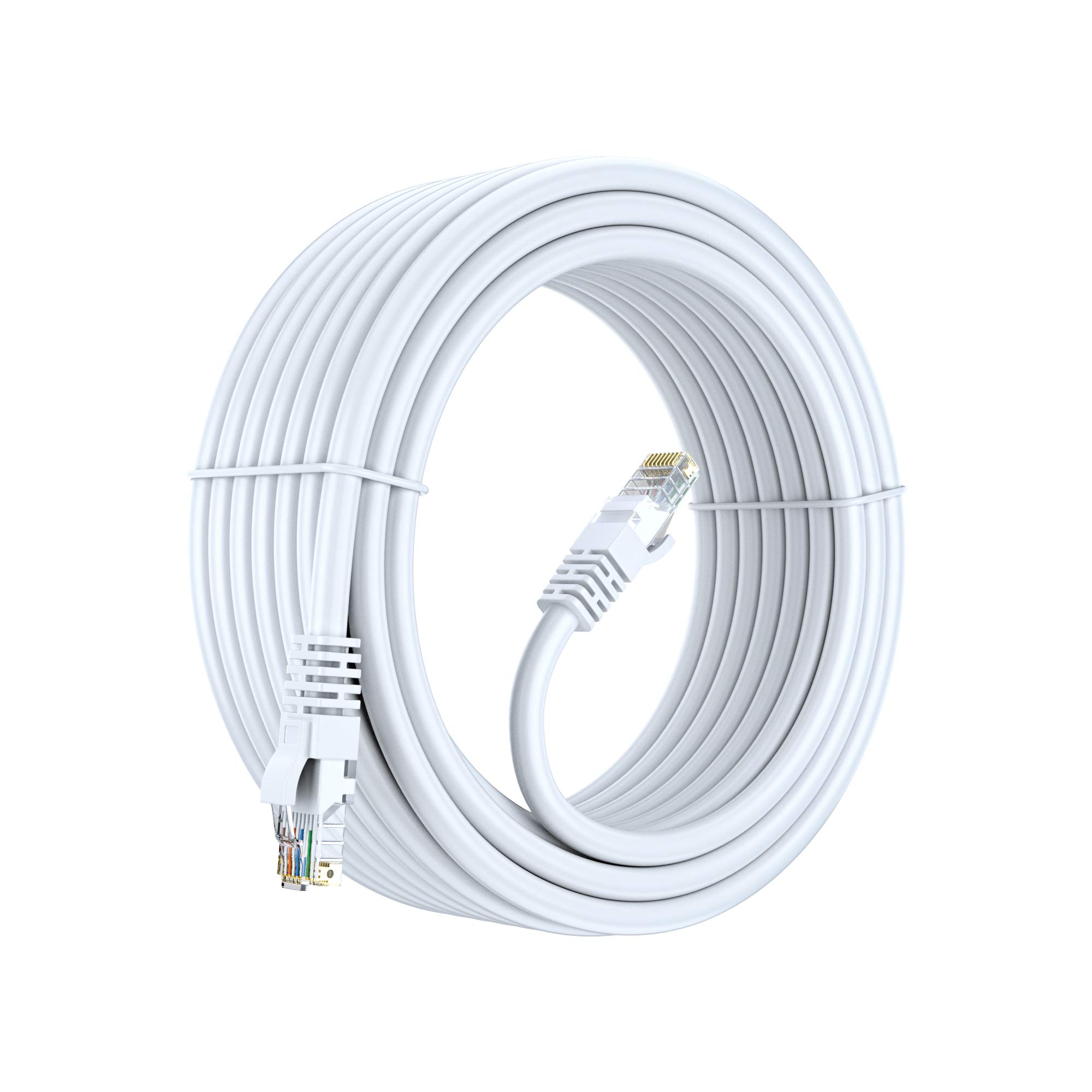
Table of Contents
- What is Cat 8 Cable? A Quick Overview
- The Key Question: Who is Cat 8 Cable Designed For?
- Who Doesn’t Need Cat 8 Cable?
- Cat 8 vs. Cat 6A vs. Cat 7: A Detailed Comparison
- Understanding Cat 8’s Technical Specifications
- When Should You Choose Cat 8? A Practical Checklist
- Partnering with a Cabling Expert for Your Infrastructure Needs
- Frequently Asked Questions (FAQ) about Cat 8 Cable
What is Cat 8 Cable? A Quick Overview
Category 8, or Cat 8, represents the cutting edge in copper twisted-pair cabling technology. Standardized by the ANSI/TIA-568-C.2-1, it was developed to support the emerging 25GBASE-T and 40GBASE-T Ethernet applications. Unlike its predecessors, which were designed for broad application across various environments, Cat 8 was engineered with a very specific purpose in mind: to provide a high-bandwidth, cost-effective copper-cabling alternative to fiber optics for short-reach connections inside the data center. Its performance leap is significant, offering four times the bandwidth of Cat 6A, but this performance comes with strict distance limitations that define its use case.
The Key Question: Who is Cat 8 Cable Designed For?
The short answer is professionals managing high-speed network infrastructure. Cat 8 is not a general-purpose cable. Its design and cost are tailored for environments where maximum data throughput over short distances is a critical operational requirement. Let’s break down the specific users and applications.
Data Centers: The Primary Use Case
Data centers are the heart of our digital world, and the connections within them need to be phenomenally fast. Cat 8 is the perfect fit for switch-to-server connections in a data center’s structured cabling. Network architects often use what are known as Top-of-Rack (ToR) or End-of-Row (EoR) designs. In a ToR setup, a network switch is placed in each server rack, and all servers in that rack connect to it. These connections are very short, typically just a few meters. Cat 8 allows these links to run at an incredible 40Gbps, facilitating rapid communication between servers and the core network, which is essential for applications like server virtualization, network-attached storage, and high-performance computing clusters.
High-Performance Server-to-Switch Connections
Beyond the data center, any enterprise-level server room that requires bandwidth well beyond 10Gbps can benefit from Cat 8. This applies to organizations in finance, video production, scientific research, and engineering, where massive datasets are constantly being moved and processed. The 30-meter channel length of Cat 8 is typically more than sufficient to connect all servers and storage arrays within a single room or to an aggregation switch, providing a powerful and robust network backbone.
Edge Computing and High-Density Environments
As more data processing moves to the “edge” of the network (closer to the end-users and IoT devices), small, localized data centers or server closets are becoming more common. These micro-data centers have the same high-bandwidth needs as their larger counterparts but within a much smaller footprint. Cat 8 is an excellent choice for these high-density environments, providing 40Gbps capabilities without the higher cost and complexity of a full fiber optic deployment.
Who Doesn’t Need Cat 8 Cable?
Understanding who doesn’t need Cat 8 is just as important as knowing who does. For many, investing in Cat 8 is not just unnecessary; it’s a poor use of resources that could be better allocated elsewhere. This clarity helps build trust and ensures customers get the right product for their needs.
Home Networks and Everyday Use
For the average home network, Cat 8 is complete overkill. The vast majority of residential internet plans are 1Gbps or less. Even with a multi-gig internet plan (e.g., 2.5Gbps or 5Gbps), a high-quality Cat 6A cable can comfortably handle speeds up to 10Gbps over 100 meters. Your internet service provider (ISP) plan, your router’s capabilities, and your devices’ network cards are the bottlenecks, not your Ethernet cable. Using a Cat 8 cable in this scenario is like building a 16-lane superhighway for a single scooter—the extra capacity goes completely unused.
Is Cat 8 Worth It for Gaming?
This is a common question driven by sharp marketing. The answer is a definitive no. Online gaming is far more dependent on low latency (ping) and a stable connection than it is on raw bandwidth. Once you have enough bandwidth to handle the game’s data stream (which is typically less than 5 Mbps), any extra capacity does nothing to improve your performance. A Cat 8 cable will provide zero advantage in ping, lag, or packet loss over a properly installed Cat 6 or Cat 6A cable. A stable, wired connection of any modern category is what gamers should prioritize.
“Future-Proofing”: A Misconception for Residential Users
Many are tempted to buy Cat 8 to “future-proof” their homes. However, this logic is flawed for several reasons. Firstly, it will likely be decades before residential internet speeds approach the 40Gbps capacity of Cat 8. By that time, it’s highly probable that new, more advanced, and more cost-effective cabling standards will be available. Secondly, the 30-meter distance limitation of Cat 8 makes it impractical for wiring an entire home, where cable runs often exceed that length. A much more practical future-proofing strategy for a home or office is installing Cat 6A, which supports 10Gbps up to 100 meters, a benchmark that will remain relevant for the foreseeable future.
Cat 8 vs. Cat 6A vs. Cat 7: A Detailed Comparison
To put Cat 8’s capabilities into perspective, it’s helpful to compare it directly with its most relevant predecessors. While Cat 7 was not widely adopted (as it was not officially recognized by TIA), Cat 6A is the current industry standard for high-performance general-purpose networking.
| Feature | Cat 6A | Cat 7 | Cat 8 |
|---|---|---|---|
| Max Speed | 10 Gbps | 10 Gbps (unofficially higher over short distances) | 40 Gbps |
| Max Bandwidth | 500 MHz | 600 MHz | 2000 MHz |
| Max Distance | 100 meters (328 ft) | 100 meters (328 ft) | 30 meters (98 ft) |
| Shielding | UTP or F/UTP (Shielded) | S/FTP (Always Shielded) | S/FTP or F/FTP (Always Shielded) |
| Primary Application | Residential, Office, Data Centers (10GBASE-T) | Not widely adopted; proprietary uses | Data Centers (40GBASE-T, Server-to-Switch) |
| Connector | RJ45 | GG45, TERA, or RJ45 (non-TIA compliant) | RJ45 |
As the table shows, Cat 8’s main advantages—speed and bandwidth—are tied to its significant disadvantage in distance. This reinforces its role as a specialized cable for short-reach, high-intensity applications, while Cat 6A remains the versatile workhorse for an extensive range of networking needs.
Understanding Cat 8’s Technical Specifications
The performance of Cat 8 is a direct result of its stringent construction and electrical requirements. These specifications are what separate it from all other categories.
Bandwidth and Frequency: The 2000 MHz Advantage
Bandwidth, measured in megahertz (MHz), can be thought of as the “width” of the data highway. A higher bandwidth allows more data to be transmitted simultaneously. Cat 8 supports a massive bandwidth of 2000 MHz, which is four times that of Cat 6A (500 MHz). This immense data-carrying capacity is what enables the 40Gbps data rate. However, this high frequency is also more susceptible to signal degradation (attenuation) and interference, which is why its distance is limited.
Speed and Distance Limitations: The 40GBASE-T Standard
Cat 8 is designed for a channel length of up to 30 meters, which includes a maximum of two connectors. This channel is composed of up to 24 meters of solid horizontal cabling and a combined total of 6 meters of patch cords. This 30-meter link is specifically what is needed to support the 40GBASE-T standard. Attempting to use Cat 8 beyond this distance will result in significant signal loss and failure to achieve the target speed.
Shielding and Construction: Built for Noise Immunity
To operate reliably at 2000 MHz, Cat 8 cables must have robust shielding to protect against crosstalk and electromagnetic interference (EMI). That’s why Cat 8 cables are always shielded, typically using S/FTP (Screened/Foiled Twisted Pair) construction. In an S/FTP cable, each individual twisted pair is wrapped in foil, and then all four pairs are wrapped together in an overall braid screen. This dual-layer of protection is critical for isolating the signal and ensuring data integrity at such high frequencies, especially in the electrically noisy environment of a data center.
When Should You Choose Cat 8? A Practical Checklist
If you’re still wondering whether Cat 8 is the right choice, here is a simple checklist. You should seriously consider Cat 8 cabling if you meet several of the following criteria:
- You are designing or upgrading a data center or enterprise server room.
- You need to support network speeds of 25Gbps or 40Gbps.
- The connections are for server-to-switch or switch-to-switch links.
- The required cable run distance is under 30 meters (98 feet).
- Your budget accommodates a premium, high-performance cabling solution.
- You are deploying hardware that specifically supports the 25GBASE-T or 40GBASE-T standard.
If your project doesn’t align with these points, you will almost certainly be better served by Cat 6A or another appropriate category.
Partnering with a Cabling Expert for Your Infrastructure Needs
Choosing the right cabling is a foundational decision for any high-performance network. For mission-critical environments like data centers, quality and reliability are non-negotiable. An infrastructure built on Cat 8 demands not only the right cable but also high-quality, compatible components, including keystone jacks, patch panels, and connectors that are rated to handle its performance. As a specialized manufacturer of structured cabling products, D-Lay Cable provides the expertise and high-quality components necessary to build a robust and reliable network, whether it’s a 10GBASE-T system built on Cat 6A or a cutting-edge 40GBASE-T backbone powered by Cat 8. Partnering with an experienced supplier ensures your infrastructure meets today’s standards and performs flawlessly for years to come.
Frequently Asked Questions (FAQ) about Cat 8 Cable
- Is Cat 8 backwards compatible with Cat 6a or Cat 5e?
- Yes, Cat 8 uses the standard RJ45 connector and is fully backwards compatible with all previous Ethernet categories. However, the connection will only run at the speed of the lowest-rated component in the channel.
- Can I use Cat 8 cable for my PS5 or Xbox Series X?
- You can, but you will see no performance benefit. These consoles have network ports that max out at 1Gbps or 2.5Gbps. A Cat 6 or Cat 6A cable will provide the exact same gaming performance for a lower cost.
- Is Cat 8 more durable than other cables?
- Cat 8 cables are generally thicker and have more robust shielding due to their performance requirements, which can make them physically more durable. However, their primary purpose is performance, not ruggedness.
- Do I need special tools to terminate Cat 8 cable?
- Yes, due to the thicker conductors and heavy shielding, you will need Cat 8-specific RJ45 connectors and potentially a termination tool designed to handle the larger cable diameter. Using Cat 6A connectors will likely result in a failed connection.
- Why is Cat 8 limited to 30 meters?
- The 2000 MHz frequency of Cat 8 is very high, causing the signal to degrade (attenuate) quickly over distance. The 30-meter limit is the maximum distance at which a 40Gbps signal can be reliably maintained according to TIA standards.