


As experts in network infrastructure at D-Lay Cable, we handle questions about cable compatibility every day. One of the most common inquiries we receive is: “Can I use a Cat6 cable for my Cat5 network?” It’s a great question that gets to the heart of network performance, future-proofing, and getting the most value from your infrastructure.
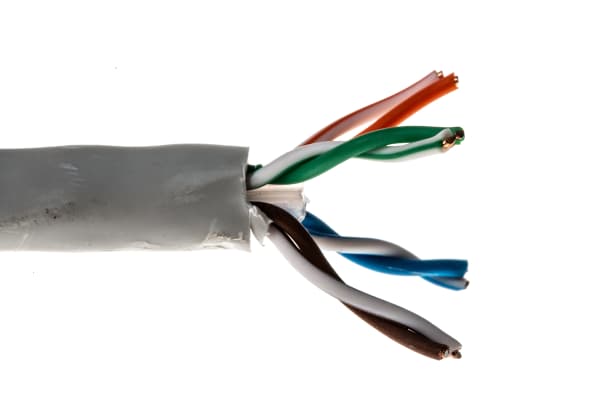
The short answer is yes, but the full story is more nuanced. Understanding the ‘why’ and ‘how’ will empower you to build a more reliable and robust network. dlaycable will walk you through everything you need to know.
In This Article:
- The Quick Answer: Yes, Cat6 is Backward Compatible
- Understanding the Core Differences: Cat6 vs. Cat5e
- The “Weakest Link” Rule: A Critical Consideration
- When to Use a Cat6 Cable in a Cat5 Network
- The D-Lay Cable Advantage: Why Quality Infrastructure is Key
- Final Verdict: Is Upgrading to Cat6 Worth It?
The Quick Answer: Yes, Cat6 is Backward Compatible
Let’s get straight to the point. Yes, you can plug a Cat6 cable into a device, wall jack, or patch panel designed for Cat5 or Cat5e. Both cable categories use the same RJ-45 connector, making them physically compatible. The principle at play here is called backward compatibility.
This means a higher-standard component (Cat6) can function perfectly within a system built on a lower standard (Cat5/Cat5e). However, the performance of that Cat6 cable will be limited to the capabilities of the Cat5e system. Think of it like putting high-performance tires on a family car—the car will drive fine, but you won’t reach race-track speeds.
Understanding the Core Differences: Cat6 vs. Cat5e
While they look similar, the internal construction of Cat6 and Cat5e cables is what sets them apart. These physical differences directly translate to performance capabilities. At D-Lay Cable, we believe in using the right component for the job, and understanding these distinctions is crucial.
| Feature | Category 5e (Cat5e) | Category 6 (Cat6) |
|---|---|---|
| Max Speed | 1 Gbps (1,000 Mbps) | 10 Gbps (up to 55 meters), 1 Gbps (up to 100 meters) |
| Bandwidth | 100 MHz | 250 MHz |
| Crosstalk | Meets minimum standards | Significantly reduced due to better construction |
| Construction | Thinner gauge wires, standard twists | Thicker gauge wires, tighter twists, often includes a “spline” (a plastic divider) |
What Do These Differences Mean?
- Speed and Bandwidth: Bandwidth (MHz) is like the number of lanes on a highway, while speed (Gbps) is the speed limit. Cat6 has a wider “highway” (250 MHz vs. 100 MHz), allowing it to handle more data simultaneously and achieve higher speeds over certain distances.
- Crosstalk and Construction: “Crosstalk” is the unwanted signal interference between wire pairs inside a cable. Cat6 cables are built to much stricter specifications. They feature tighter-twisted pairs of wires and often a plastic divider called a spline that runs down the center, physically separating the pairs. This superior construction drastically reduces crosstalk, leading to a more stable, reliable signal with fewer errors—even at lower speeds.
The “Weakest Link” Rule: A Critical Consideration
This is the most important concept to grasp. Your network’s overall speed is determined by its slowest component. This “weakest link” can be any part of the chain:
- The Ethernet port on your router, switch, or computer.
- The wall jacks (keystone jacks).
- The patch panel in your server closet.
- Any other cables connecting the system.
If you connect a high-performance Cat6 patch cord from your new computer to a wall jack that is wired with Cat5e cable, your connection will perform at Cat5e standards (1 Gbps max). The Cat6 cable will not magically upgrade your entire network. However, it ensures that the cable itself is not the bottleneck.
When to Use a Cat6 Cable in a Cat5 Network
Given the “weakest link” rule, when does it actually make sense to use a Cat6 cable in an existing Cat5e system? The answer is: almost always.
- Replacing a Faulty Cable: If a patch cord fails, replacing it with a Cat6 cable is a smart, simple upgrade. The cost difference for individual patch cords is often minimal, and you get a more durable, reliable cable.
- Connecting New, High-Speed Devices: When adding a new PC, gaming console, or smart TV that has a 2.5 Gbps or 10 Gbps port, using a Cat6 cable ensures you’re prepared for future network upgrades, even if the rest of your network is currently 1 Gbps.
- Reducing Signal Interference: In environments with high electromagnetic interference (EMI)—like near power cables, fluorescent lights, or motors—the superior shielding and construction of a Cat6 cable can provide a cleaner signal and a more stable connection, even at 1 Gbps speeds.
The D-Lay Cable Advantage: Why Quality Infrastructure is Key
As a company dedicated to providing professional-grade cabling, we see the long-term benefits of investing in quality. Choosing Cat6 over Cat5e, even for a 1 Gbps network, is an act of future-proofing.
The demands on our networks are only increasing. 4K/8K video streaming, cloud-based applications, large file transfers, and the Internet of Things (IoT) all place a heavy load on your infrastructure. A network built today on Cat5e might be sufficient, but it leaves no room for growth.
By using Cat6 cables for all new installations or replacements, you are building a robust foundation that is ready for the next generation of technology. You ensure that when you eventually upgrade your router and switches to multi-gig speeds, your cabling will be ready to support it without needing a complete and costly overhaul. This is why at D-Lay Cable, we champion high-performance solutions like Cat6—they provide not just immediate compatibility, but also long-term value and peace of mind.
Final Verdict: Is Upgrading to Cat6 Worth It?
So, will Cat6 work for Cat5? Absolutely, and it’s highly recommended.
While it won’t instantly boost your network speed beyond the limits of your existing Cat5e hardware, a Cat6 cable provides a more reliable, stable connection thanks to its superior construction and resistance to crosstalk. For new builds or simple cable replacements, the minor cost increase is a small price to pay for the significant benefits in performance headroom and future-readiness.
Think of it as a smart investment in the backbone of your digital life. By choosing a high-quality Cat6 cable, you ensure that your infrastructure is not just functional for today, but prepared for the demands of tomorrow.